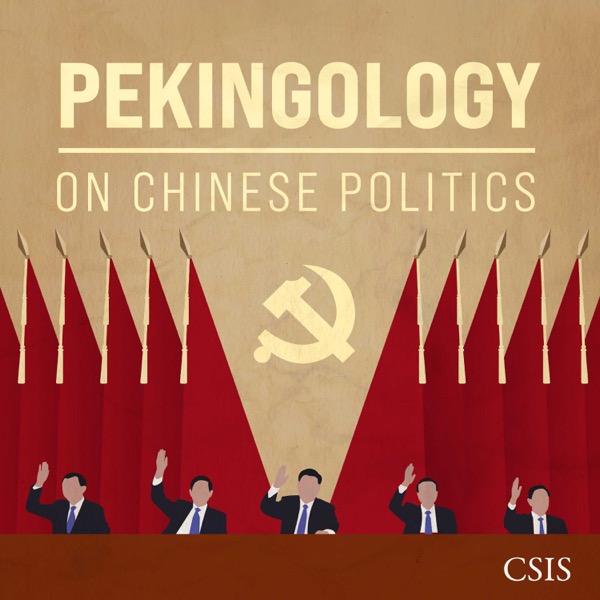
Pekingology
En podkast av Center for Strategic and International Studies - Torsdager

108 Episoder
-
Rebuilding Authority
Publisert: 30.6.2022 -
Coalitions of the Weak
Publisert: 16.6.2022 -
Factional Model-Making in China
Publisert: 2.6.2022 -
China’s Power Position in Global Ports
Publisert: 19.5.2022 -
Foreign and Security Policymaking in Xi Jinping’s China
Publisert: 5.5.2022 -
The Rise of Data Politics
Publisert: 21.4.2022 -
Elite Purges in Marxist-Leninist Regimes
Publisert: 7.4.2022 -
Defending Stability Under Threat
Publisert: 24.3.2022 -
The Xi Jinping Effect
Publisert: 10.3.2022 -
Why Does the CCP Need a Core?
Publisert: 24.2.2022 -
Grading Xi Jinping
Publisert: 10.2.2022 -
Democratic Centralism
Publisert: 27.1.2022 -
Performative Governance
Publisert: 13.1.2022 -
From General Secretary to Chairman: Xi Jinping’s Third Road
Publisert: 16.12.2021 -
Cyber Nationalism and Regime Support under Xi Jinping
Publisert: 2.12.2021 -
Public Opinion in China
Publisert: 18.11.2021 -
Special Deals with Chinese Characteristics
Publisert: 21.10.2021 -
From Mao to Now
Publisert: 7.10.2021 -
Political Risk and Firm Exit
Publisert: 23.9.2021 -
Who Not What
Publisert: 9.9.2021
China has emerged as one of the 21st century’s most consequential nations, making it more important than ever to understand how the country is governed. True to the name Pekingology, or the study of the political behavior of the People’s Republic of China, this podcast aims to unpack the behavior of the Chinese Communist Party and implications these actions have within China and for U.S.-China relations. Jude Blanchette, the Freeman Chair in China Studies at CSIS, is joined by various experts to analyze the activities of the Chinese governing system and how these impact the complex relationships relating to China.